Your cart is currently empty!
-
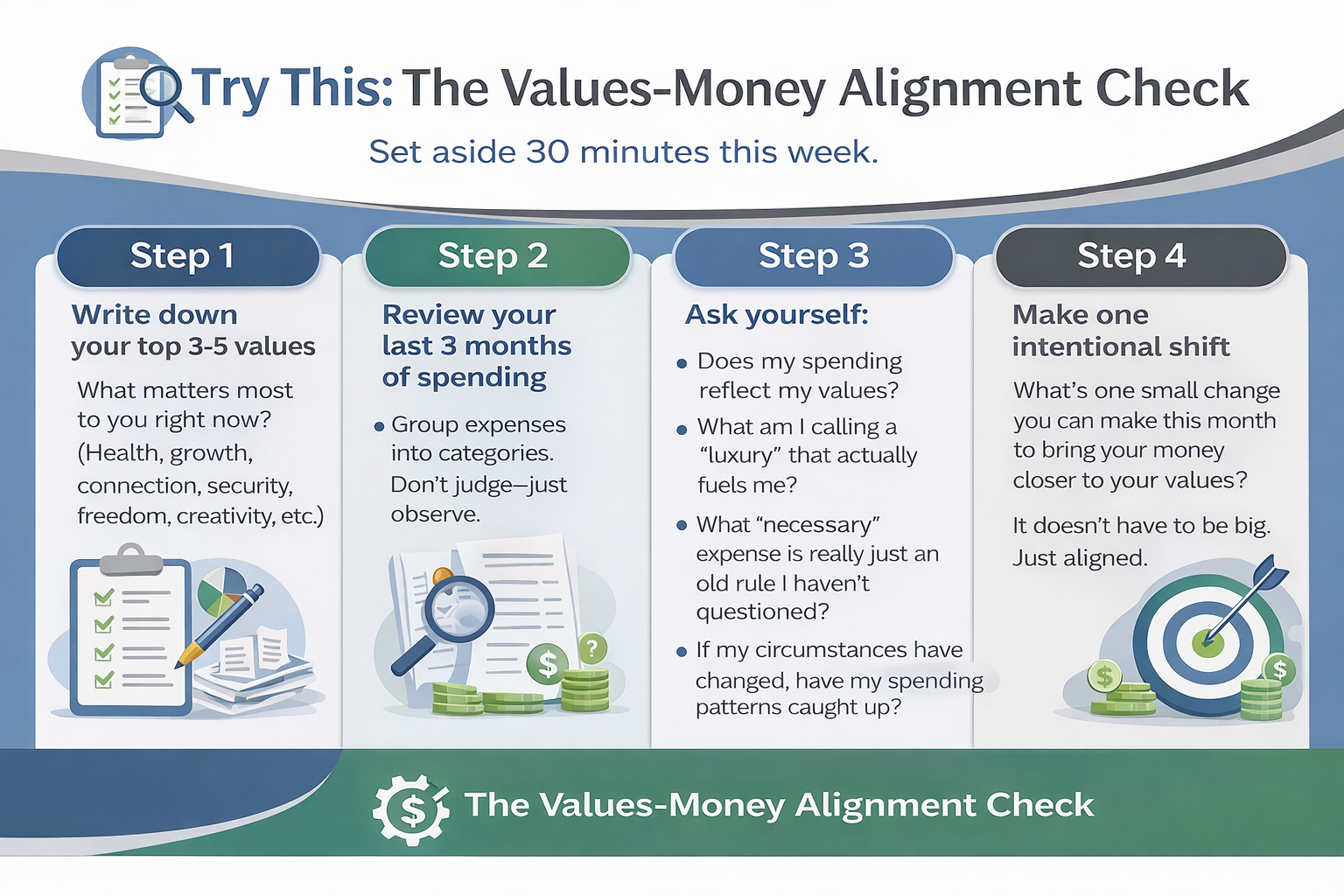
Money as a Mirror: What Your Spending Reveals About Your Values
•
Your bank statement doesn’t lie. You can say that family matters most, but if you haven’t visited them in two years because you’re “saving money,” your spending tells a different story. You can say creativity is important, but if you won’t buy supplies because they feel like a “luxury,” your budget reveals what you…
-

Feeling Stuck or Frustrated? It Might Be a Signal — Not a Flaw.
•
Ever feel like you’re pushing through quicksand? Doing all the “right” things, but still feel drained, disconnected, or stuck? Here’s a reframe: Stuck isn’t always a problem to fix — sometimes, it’s a message to listen to. Frustration often shows up when something inside us is out of sync with: You might be working…
-

From Judgment to Curiosity: A Shift That Changes Everything
•
Curiosity is more than just a trait—it’s a mindset that shapes how we engage with the world, innovate, and connect. When we choose curiosity over judgment, defensiveness, or assumptions, we: When we enter conversations with curiosity rather than expectation or animosity, we give ourselves a head start on connection, clarity, and problem-solving. Here are…
-

From Tools to Traits: What Makes a Great Supervisor?
•
We’ve talked a lot about tools for leadership. But no matter how effective your tools are, they’re only as powerful as the person using them. The best supervisors aren’t just process-driven—they’re people-centered. What truly sets great supervisors apart? It starts with: These traits build trust, psychological safety, and motivation—all crucial for engaged, high-performing teams.…
-

Tools for Leadership
•
Self-Awareness & Growth Self-aware leaders are more effective at navigating challenges, fostering trust, and building cohesive teams. Personality and leadership tools provide a valuable starting point by offering insights into our natural tendencies, communication styles, and blind spots. Why Personality Typing Tools Matter Understanding what leadership qualities are important is only part of the…
-

Toxic Work Environments Fuel Burnout — Here’s How to Spot One
•
Burnout doesn’t happen in a vacuum. It often takes root in environments where dysfunction is normalized — where pressure is high, support is low, and psychological safety is nonexistent. In other words: burnout is often a symptom of a toxic workplace. Toxic environments aren’t always loud or obvious. Sometimes they hide behind high performance,…
-

Burnout Isn’t a Personal Problem. It’s an Organizational One.
•
When burnout shows up, the first instinct is often to tell people to “practice more self-care.” But as Christina Maslach, one of the foremost burnout researchers, has made clear: Burnout is a sign of a broken system – not a broken person. It’s not about resilience workshops, yoga at lunch, or better time-blocking. It’s…
-

Let’s Talk About Burnout
•
Burnout isn’t just about being tired. It’s a real, measurable experience that affects performance, health, and team culture — and it often shows up quietly before it becomes overwhelming. The Maslach Burnout Inventory (MBI) – a widely used research-backed tool – identifies three core dimensions of burnout: Many leaders don’t recognize the signs until…